

Decorating a child's room is about more than just picking pretty items. The key lies in creating a cohesive, balanced, and functional space where every piece makes sense as part of a whole. When achieved, the result is not only visually appealing but also cozier and more durable over time.
If you are looking to achieve a complete kids' room decor, this guide will help you structure the process step-by-step, avoiding common mistakes and understanding how to combine each element strategically.
Step 1: Choose a Theme or Decorative Style
It all starts here. Before thinking about specific products, you need to define a clear aesthetic base. This is what will provide coherence to the entire room.
A frequent mistake is buying isolated items that you like individually but don't fit together later. To avoid this, first define a global decorative concept.
Some popular options:
- Nature themes: forest, animals, jungle
- Soft and neutral styles: beige, grey, off-white tones
- Imaginative universes: space, fairytales, fantasy
- Romantic or delicate aesthetics: flowers, ballerinas, pastel tones
The goal is not to box yourself in, but to establish a direction. From there, everything will be easier.
A great way to start is by exploring kids' wallpaper options, as it usually sets the main visual tone of the room. For example, designs like this forest-style wallpaper show how one wall can define the entire aesthetic of the space.
Practical Tip:
Choose a style that can evolve. Avoid overly "babyish" decorations if you want the room to work for several years.
Step 2: Combining Wallpaper, Duvet Covers, and Wall Art
Once the style is defined, the most important part arrives: integrating the main elements of the room.
This is where a complete decoration is truly built.
Coordinating Colors and Patterns
Visual balance depends on how you combine colors, patterns, and textures.
Basic rules that work:
- Choose a palette of 2 to 4 primary colors
- Combine a dominant pattern with softer ones
- Introduce solid elements to create balance
For example:
- An illustrated wallpaper (forest, animals, stars)
- A duvet cover in coordinated tones (without oversaturating)
- Wall art that reinforces the theme
You can rely on textiles such as kids' duvet covers, which help unify the bed with the rest of the space. A design like this illustrated duvet cover provides visual continuity without cluttering the room.
Regarding wall art, it acts as the finishing touch to the decorative set. Options like personalized birth prints allow you to add an emotional component without breaking the aesthetic.
Key Advice:
If the wallpaper is the main star, lower the intensity of the rest of the elements.
Visual Space Distribution
It’s not enough to choose the right elements; it’s also essential to place them correctly.
Good distribution creates harmony even with few elements.
Basic guidelines:
- Main wall: Reserve wallpaper or murals for the most visible area (bed or crib)
- Rest area: Use soft and cohesive textiles
- Focal points: Place wall art or decals where you want to direct the eye
For example:
- Headboard + wallpaper
- Bed with coordinated duvet cover
- Centered wall art or a gallery arrangement
Personalized wall art, such as a birth announcement print, works especially well over the crib or bed, adding identity without overdecorating.
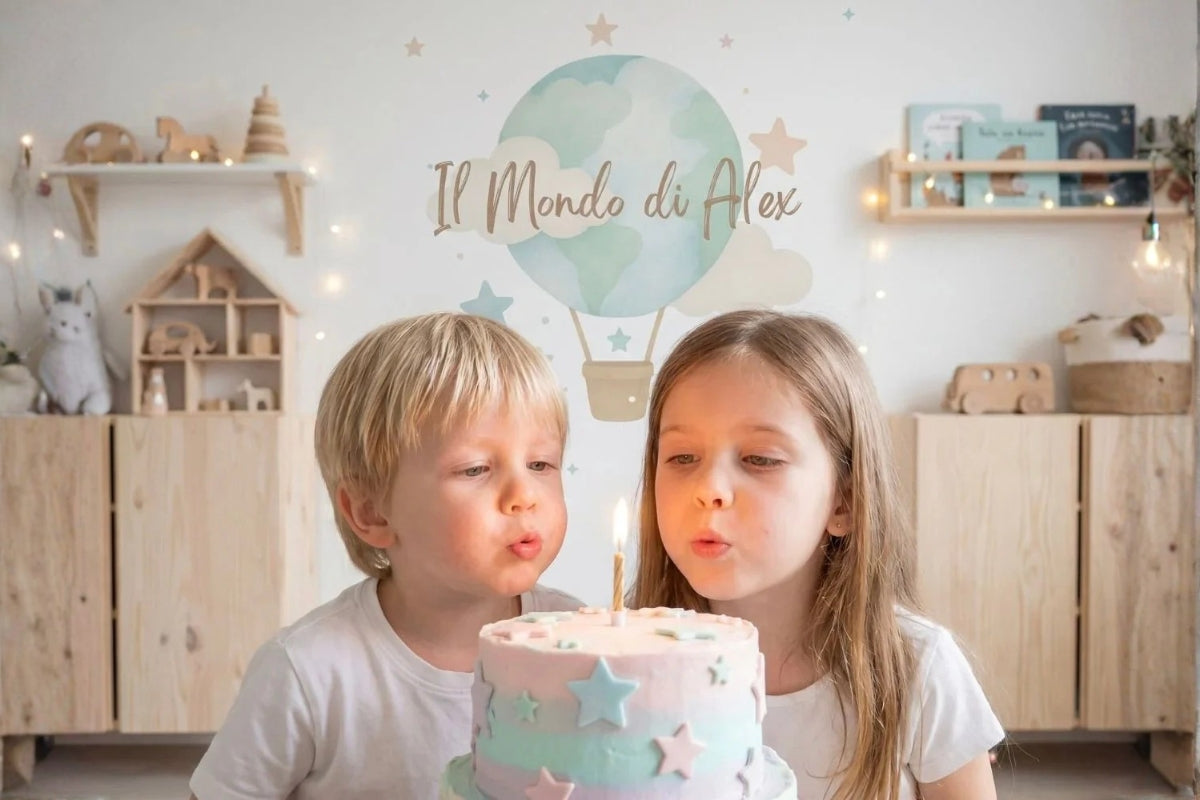
You can also complement the look with wall decals if you want to add dynamism without needing a full renovation, as seen in the kids' wall decals collection.
Visual Rule: Fewer well-placed elements always work better than many without order.
Common Mistakes in Kids' Decoration
Even with good taste, it's easy to make mistakes that affect the final result. These are the most common and how to avoid them:
1. Mixing too many styles
Combining elements without a common thread creates visual chaos. Solution: Define a base style and stick to it.
2. Overusing intense colors
Too many strong colors can saturate the space. Solution: Use neutral tones as a base and add color in the details.
3. Not thinking about the whole
Impulse buying without visualizing the global result. Solution: Always imagine how each piece fits into the big picture.
4. Overloading the walls
Too many pictures, decals, or decorative items. Solution: Leave "white space" to allow for visual breathing room.
5. Ignoring functionality
A child's room must also be practical. Solution: Prioritize comfort, ease of cleaning, and durability.
6. Not adapting decor to growth
Overly "baby-centric" decorations become obsolete quickly. Solution: Opt for timeless designs.
Key Products to Transform the Room Without Renovations
If you are looking for a complete kids' room decor without construction work, certain elements have an immediate impact.
1. Wallpaper or Murals
The most powerful resource for changing a space. They define the style and create the atmosphere.
- Adds personality
- Covers large surfaces
- Transforms without the need for painting
2. Coordinated Textiles
Duvet covers, cushions, or crib bumpers help bond the overall look together.
- Unify colors
- Provide warmth
- Are easy to refresh
3. Decorative and Personalized Wall Art
These are the elements that bring identity and emotion.
- Reinforce the theme
- Add a personal touch
- Visually complete the wall
4. Wall Decals
Perfect for complementing without saturating.
- Easy to apply
- Adaptable
- Ideal for adding small details
5. Auxiliary Elements
Small details that add up: cushions, lamps, door plaques, or rugs. They help close the decoration and make it more inviting.


Leave a comment
All comments are moderated before being published.
This site is protected by hCaptcha and the hCaptcha Privacy Policy and Terms of Service apply.